❋
Headaches & Migraines Acupuncture Treatment
Headaches and Migraines Treatment
Acupuncture for Headaches and Migraines in Adelaide
Are recurring headaches or migraines making it difficult to work, sleep, concentrate or enjoy everyday life?
Head pain can be exhausting and unpredictable. You may find yourself planning your day around the next headache, avoiding light and noise, or worrying that a migraine will interrupt an important occasion. At Essential Acupuncture Clinic in Adelaide, Julie offers personalised acupuncture for people seeking additional support with migraines, tension headaches and associated neck and shoulder tension.
Your care is tailored to you. Julie takes time to understand the pattern of your headaches, possible triggers and the effect they have on your whole wellbeing—not simply where the pain is felt.

Understanding Headaches and Migraines
Not every headache is the same. The location, sensation, duration, frequency and associated symptoms can all help identify what type of headache you may be experiencing.
Common headache presentations include:
Tension-type headaches
Migraine with or without aura
Headaches associated with neck tension or posture
Menstrual or hormonally influenced migraines
Stress-related headaches
Headaches associated with poor sleep, jaw tension or prolonged screen use
A correct diagnosis is important, particularly when headaches are new, severe, changing or frequent. Acupuncture does not replace a medical assessment. If you are unsure what type of headache you have, or your symptoms have changed, speak with your GP before beginning complementary care.

What Does a Migraine Feel Like?
Migraine is a complex neurological condition—not simply a severe headache. An attack may involve throbbing or pulsating pain, often on one side of the head, and can last from several hours to several days when untreated.
Symptoms may include:
Moderate or severe head pain
Nausea or vomiting
Sensitivity to light, sound or smell
Pain that becomes worse with physical activity
Blurred vision or visual disturbances
Dizziness or difficulty concentrating
Neck pain or stiffness
Fatigue or “brain fog” before or after an attack
Some people experience an aura before or during migraine. This may involve flashing lights, blind spots, tingling, numbness or difficulty speaking. New or unusual neurological symptoms require prompt medical assessment because they may have causes other than migraine.

Exercise, Reflect & Heal
with Acupuncture and Lifestyle
Acupuncture for Migraines and Headaches
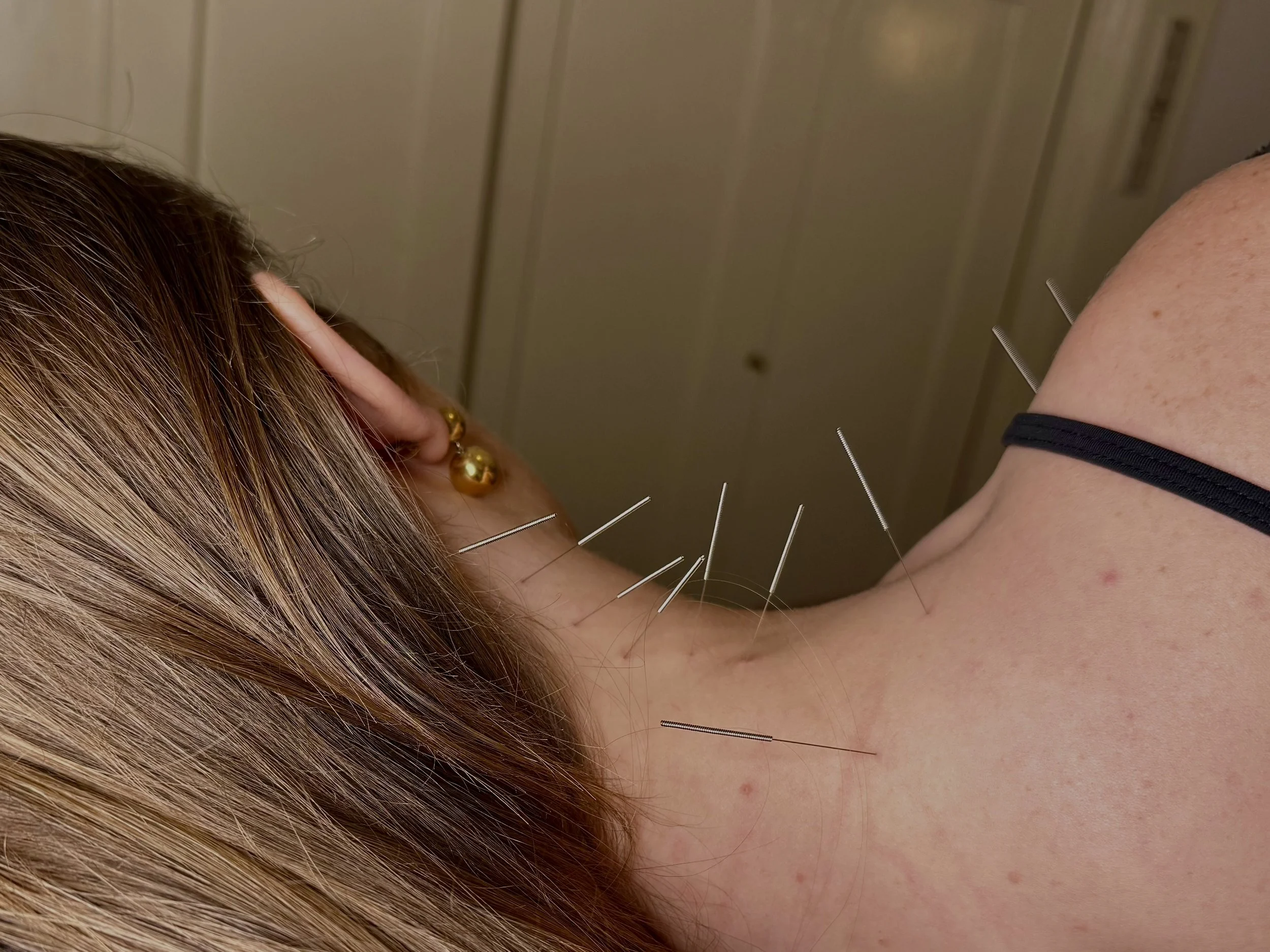
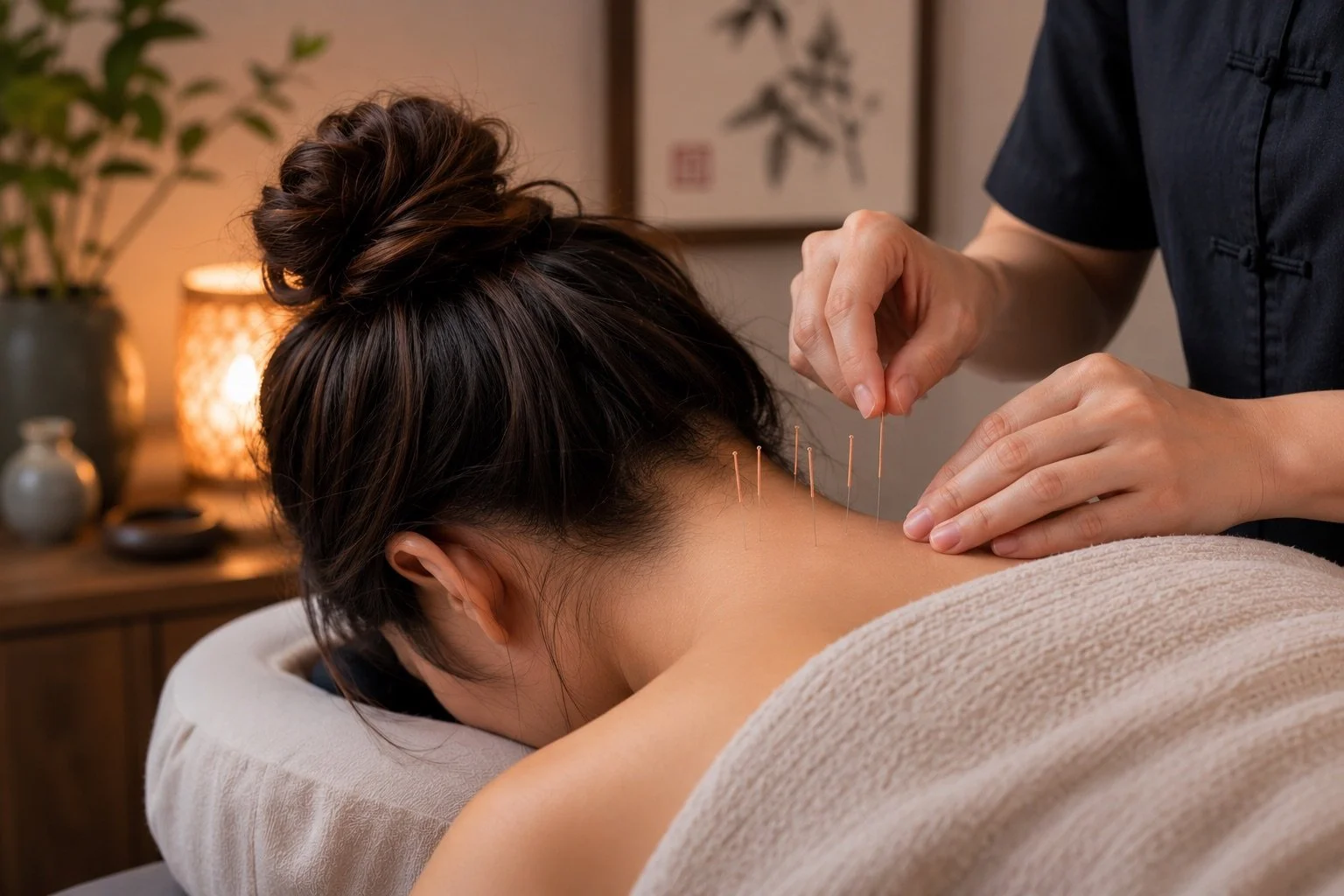
Acupuncture involves inserting fine, sterile, single-use needles into carefully selected points on the body. Point selection and treatment planning are personalised according to your presentation, medical history and treatment goals.
Rather than using the same treatment for every headache, Julie may consider:
Where the pain begins and how it travels
Whether the pain is throbbing, sharp, dull or pressing
How often headaches occur and how long they last
Migraine aura, nausea or sensitivity to light and sound
Neck, shoulder or jaw tension
Stress and emotional wellbeing
Sleep quality and energy
Menstrual cycles, perimenopause or menopause
Digestion, hydration, meals and caffeine
Medication use and possible triggers

Research Supporting Acupuncture for Headaches and Migraines Treatment
A 2020 randomised clinical trial published in The BMJ included 150 people with episodic migraine without aura. Participants a greater reduction in migraine days and migraine attacks. The study also examined acupuncture in terms of prevention between migraine attacks.
A 2022 randomised trial published in Neurology studied 218 people with chronic tension-type headache. After 20 sessions over eight weeks, a greater proportion of participants receiving the study’s true-acupuncture protocol achieved at least a 50% reduction in monthly headache days.
A Caring and Holistic Approach to Headaches and Migraines Support
Living with recurring head pain can affect much more than the painful hours themselves. It may influence your confidence, mood, family life, exercise, sleep and ability to make plans. You may also feel frustrated when other people cannot see what you are experiencing.
At Essential Acupuncture Clinic, you will be cared for as a whole person. Julie listens with patience and considers the physical and emotional factors surrounding your headaches. Your appointments offer dedicated time to slow down in a calm, private and supportive environment while receiving treatment tailored to your individual needs.
The aim is to help you feel heard, understand your headaches and migraines pattern more clearly and make informed choices about your ongoing care.

Your Personalised Acupuncture Consultation
During your first appointment, Julie will ask about your symptoms, health history and any medical diagnosis you have received. Bringing a list of medications and supplements is helpful.
Your consultation may explore:
When your headaches began
Their location, sensation and intensity
How many headache or migraine days you experience each month
How long attacks usually last
Symptoms before, during and after an attack
Known or suspected triggers
Neck movement, posture and muscular tension
Sleep, stress, energy and digestion
Menstrual or menopausal patterns where relevant
Medicines used for acute attacks or prevention
Previous investigations and treatments
An personalised treatment approach will be designed appropriate to your presentation. Your progress may be reviewed by tracking headache days, migraine attacks, pain intensity, medication use and the effect of symptoms on daily life.

Keeping a Headache or Migraine Diary
A diary can help you and your healthcare practitioners see patterns that are difficult to notice from memory alone. It can also provide a clearer way to assess whether your symptoms are changing over time.
Consider recording:
The date and time your headache begins
Where the pain is located
The type and intensity of pain
How long it lasts
Aura, nausea or sensitivity to light and sound
Sleep, stress, meals, hydration and caffeine
Menstrual cycle timing where relevant
Medication taken and its effect
Whether the headache interrupted work, exercise or sleep
Not every migraine has an obvious trigger, and you should not blame yourself when an attack occurs. A diary is simply a practical tool for understanding your individual pattern.
Book an appointment today!
Supporting Your Headache Management
Helpful everyday strategies may include:
Keeping sleep and waking times reasonably consistent
Eating regular meals
Drinking enough water
Taking regular breaks from screens
Adjusting your desk and laptop position
Including comfortable movement and exercise
Using relaxation or stress-management techniques
Following your doctor’s medication plan
Avoiding frequent overuse of pain-relieving medicines

Why Choose Essential Acupuncture Clinic?
Julie is an AHPRA-registered acupuncturist and Chinese medicine practitioner with many years of clinical experience. Her approach is calm, caring and individualised. More importantly, she has trained under Pro. Shiliang Li (Renowned Chinese acupuncture and acupotomy specialist) who is best known for pioneering in the global acupuncture industry.
At Essential Acupuncture Clinic, you can expect:
A detailed and unhurried consultation
Personalised acupuncture treatment
Consideration of your headache pattern and whole health
A calm and private treatment environment
Respect for your medical care and current medication
Clear communication and regular review of progress
Compassionate support without unrealistic promises
Our clinic welcomes people seeking acupuncture for migraines, tension headaches and related neck or shoulder tension from across Adelaide and the surrounding suburbs.
Reconnect with your body and mind pain-free in your everyday life.Frequently Asked Questions
Can acupuncture cure migraines?
No treatment can promise to cure migraine. Research suggests acupuncture may reduce migraine frequency or burden for some people when used as a preventive treatment. In my practice, most of my clients suffered from years of chronic headaches and migraines reported positive results that their symptoms is relieved after received systematic acupuncture treatments.
Can acupuncture stop a migraine attack immediately?
The strongest research discussed on this page relates to prevention over a course of treatment, not guaranteed immediate relief during an acute attack. Follow your medical migraine plan and seek urgent care for sudden, severe or unusual symptoms.
Can acupuncture help tension headaches?
Research suggests acupuncture may benefit some people with frequent or chronic tension-type headaches. Your suitability depends on the type and cause of your headaches, your general health and whether medical assessment is needed first when necessary.
How many acupuncture treatments will I need?
There is no single schedule that suits everyone. Julie will consider how long you have experienced headaches, how frequently they occur, their severity and your overall health before discussing a treatment plan. Progress is reviewed rather than assuming a fixed outcome.
Is acupuncture painful?
Acupuncture needles are very fine. You may notice a brief sensation during insertion, followed by heaviness, warmth, tingling or relaxation. Treatment should not feel sharply painful, and you can tell Julie immediately if anything feels uncomfortable.
Can I have acupuncture while taking migraine medication?
Acupuncture can often be provided while you continue prescribed medication. Tell Julie about all prescription medicines, over-the-counter products and supplements you use. Do not stop or reduce medication without consulting the prescribing doctor.
Can stress or hormones trigger migraines?
Stress, sleep changes and hormonal changes around menstruation or menopause can be triggers for some people, but triggers are individual. Some people thinking they are suffering hormonal headaches, however, scientific researches have indicated that hormone changes during puberty, pregnancy, menstrual cycles can be a trigger but the root problem is often due to underlying problems in the muscles upon lower skull and upper neck area, mostly C1, C2, C3 and C4. Julie will consider these patterns as part of your consultation while encouraging appropriate medical care.
Should I keep a migraine diary?
Yes. Recording migraine days, associated symptoms, possible triggers and medication use can help you, Julie and your doctor understand your pattern and assess change more accurately.